How to write a resume in the US
A US resume has one job: to get you an interview. Recruiters often spend less than ten seconds on a first look, so your resume needs to show quickly, on one page if you can, that you have done this kind of work and done it well. Here is how to build one.
The standard resume sections
- Header: name, phone, email, LinkedIn URL, and city and state.
- Summary: two or three lines on who you are and what you bring. Optional for students.
- Experience: jobs in reverse-chronological order, with title, company, city and dates (month and year).
- Education: degree, school and graduation year. Add GPA, honors and relevant coursework if you are a student or recent graduate.
- Skills: tools, technologies, certifications and languages that match the job description.
- Optional: projects, volunteer work, publications or awards, if they help for this job.
Students and recent graduates can put education first. Everyone else should lead with experience.
One page or two?
One page is the US default for anyone with less than about ten years of experience, and for almost all students. Two pages is fine for senior professionals with a long, relevant record. Never go to two pages just to fit in older or less relevant jobs. Cut them instead.
Write a summary, not an objective
Objective statements (“Seeking a challenging role…”) are out of date. A summary tells the employer what you offer instead.
Operations manager with 8 years in e-commerce fulfillment. Run a 120-person warehouse shipping 15,000 orders a day at 99.6% accuracy, and cut cost per order 18% in two years. Lean Six Sigma Green Belt.
Turn duties into achievements
Each bullet should start with a strong action verb and end with a result. Numbers (dollars, percentages, time, volume) make your impact concrete and easy to compare.
Responsible for managing social media accounts.
Grew Instagram followers from 8K to 45K in 12 months and drove $210K in attributed sales through a weekly creator series.
Aim for three to five bullets for recent roles and one or two for older ones. Give detail for roughly the last ten to fifteen years.
Tailor it to every job
Read the job description and mirror its language. If it asks for “stakeholder management” and “SQL”, use those exact words where they are true. This helps with both applicant tracking systems and human readers, who are looking for a match.
Read our guide to writing an ATS-friendly resume
What to leave off a US resume
- Photo, date of birth, age, marital status, religion or Social Security number.
- References and the line “References available upon request”.
- Your full street address: city and state are enough.
- Salary history: many states don’t allow employers to ask for it anyway.
- High school, once you have a college degree.
- An unprofessional email address.
Final checklist
- One page (two if you are senior), on US Letter.
- A summary tailored to this job.
- Every bullet starts with a verb, and most include a number.
- Keywords from the job description, used truthfully.
- No photo, date of birth or references.
- Saved as a PDF named like “Jane-Smith-Resume.pdf”.
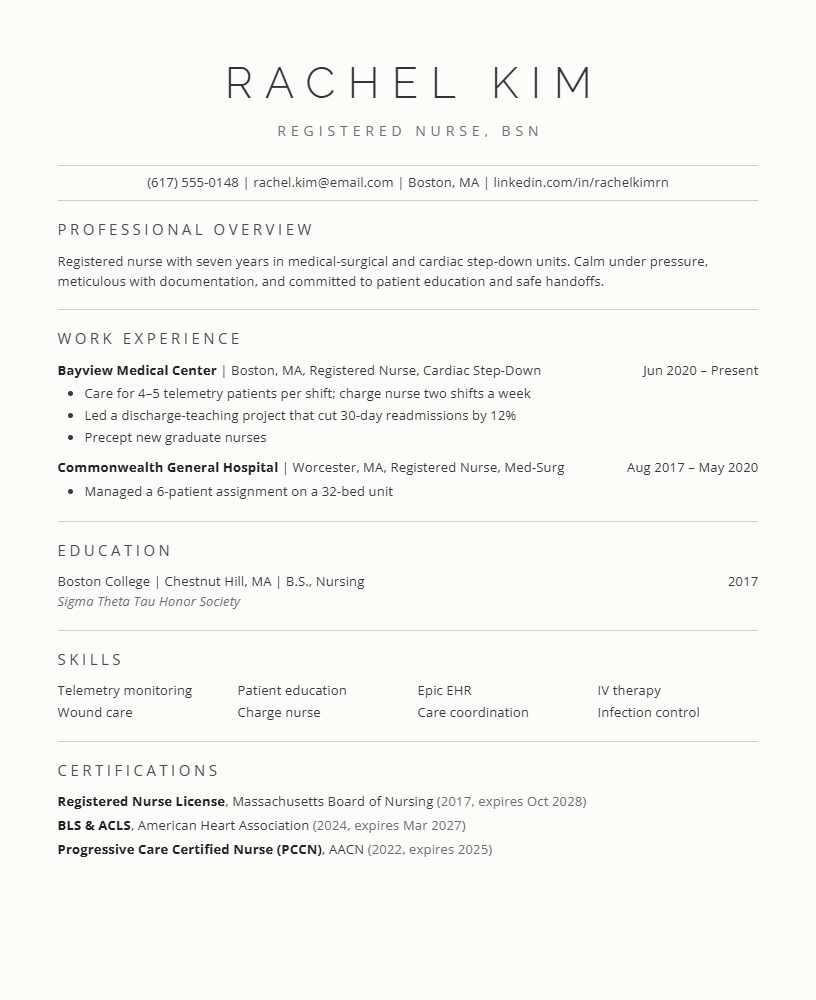
A clean single-column resume that follows this guide and passes ATS screening.
Use this template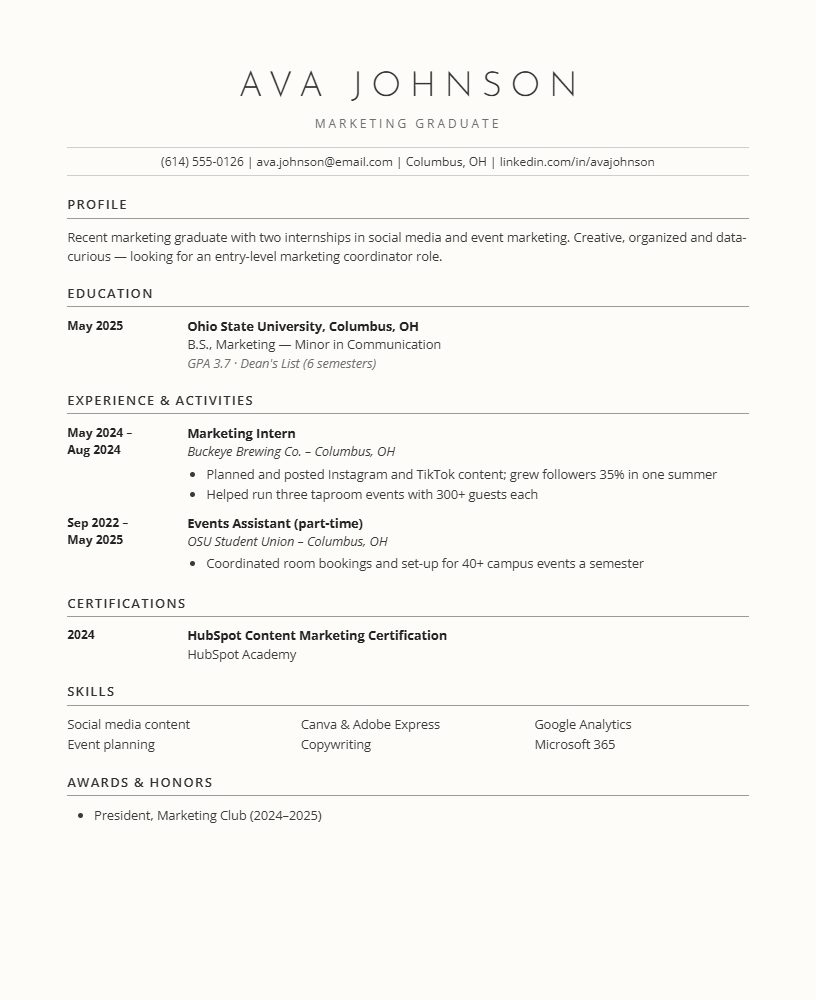
For students and new graduates: education first, one page.
Use this templateFree to edit online. US$12 one-off to download, with no subscription.