Canadian vs US resume: what’s different?
Canadian and American resumes look almost the same, and most of the advice for one works for the other. But there are a few differences that make a resume read as clearly Canadian or clearly American. If you apply on both sides of the border, adjust these.
What’s the same
- The word “resume”, and Letter-size paper.
- Reverse-chronological order, a summary at the top, and achievement-focused bullets.
- No photo, date of birth or other personal details.
- No references on the resume itself.
- Heavy use of applicant tracking systems by large employers.
Spelling
Canadian spelling mixes British and American habits: colour, centre, behaviour, labour, cheque, but organize, realize and program. Use the spelling of the country you are applying to. A recruiter in Toronto will notice “color” and “center”, and a recruiter in Chicago will notice “colour”.
Length
US recruiters lean strongly towards one page for anyone with less than about ten years of experience. In Canada, two pages is more readily accepted for experienced professionals. Students and new graduates should keep to one page in both countries.
Volunteering and community work
Canadian employers often give volunteer work and community involvement more weight, especially for students and newcomers. A dedicated “Volunteer experience” section is common on Canadian resumes. On a US resume, include volunteering when it is relevant to the job.
Languages
In Canada, English–French bilingualism is valuable, and required for many federal government roles. Put it near the top if you have it, with your level. In the US, mention other languages where they help with the job, for example Spanish for customer-facing roles.
Work status
If you are a Canadian applying in the US, your status matters: a line such as “Canadian citizen, eligible for TN status” helps for professions covered by the agreement between the two countries. Americans applying in Canada should note any work permit. If you already have the right to work, “Authorized to work in Canada” or “Authorized to work in the US” is enough.
Quick conversion checklist
- Switch spelling to the target country.
- Check the length: one page for the US unless you are senior.
- Keep or trim the volunteer section to suit the employer.
- Update your city, phone format and work status line.
- Rename provincial or state-specific credentials so they make sense to the reader.
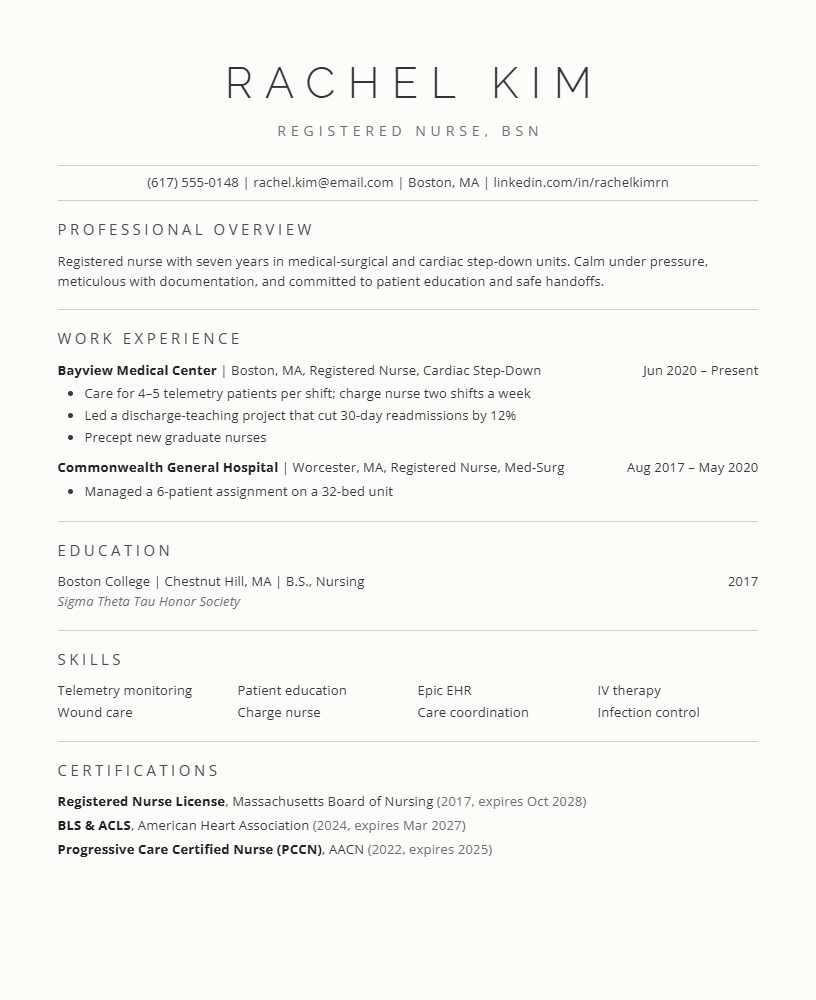
A single-column layout that works for both Canadian and US applications.
Use this template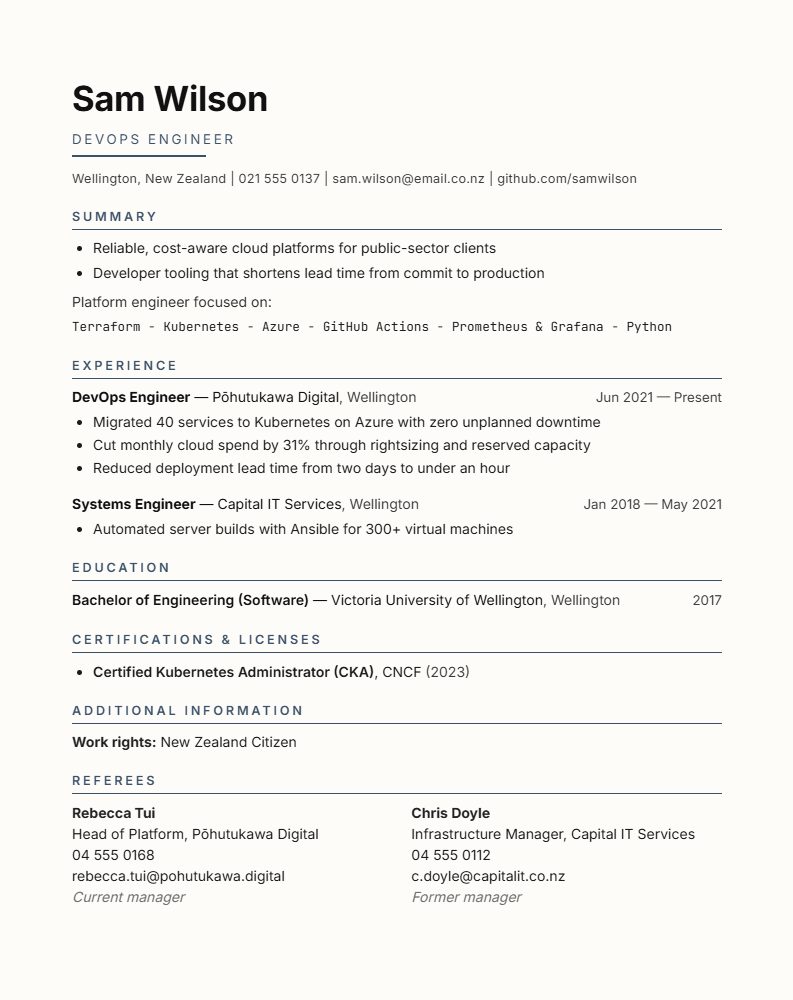
ATS-friendly and plain, for technical roles in either country.
Use this templateFree to edit online. US$12 (about C$17) one-off to download, with no subscription.