How to write a resume in Canada
A Canadian resume is a short, focused document, usually one or two pages, that shows an employer what you have achieved and why you fit the job. It looks a lot like a US resume, with a few Canadian habits. Here is how to write one.
The standard sections
- Header: name, phone, email, LinkedIn URL, and city and province, for example “Calgary, AB”.
- Summary: three or four lines on who you are, what you offer and what you want next.
- Skills: a short list that matches the job posting.
- Experience: jobs in reverse-chronological order, with title, employer, city and dates (month and year).
- Education: degree, diploma or certificate, school and year. Add co-op terms, honours and relevant courses if you are a student.
- Certifications and licences: professional designations, Red Seal, first aid, a driver’s licence if the job needs one.
- Volunteer experience: roles, organizations and results.
How long should a Canadian resume be?
One page for students, new graduates and people with a few years of experience. Two pages is standard for experienced professionals. Give detail for roughly the last ten to fifteen years, and summarize older roles or leave them off.
Writing your summary
Bilingual customer service team lead (English and French) with six years in banking and telecom contact centres. Lead a team of 14, consistently beating service-level targets, and cut average handle time by 20% through better coaching. Looking for a client service manager role in Ottawa.
If you speak French, say so near the top. Bilingualism is a real advantage in federal government jobs and many national companies.
Show results, not duties
Start each bullet with an action verb and end with a result. Numbers help: customers served, sales, budgets, team size, time saved.
Responsible for inventory.
Rebuilt inventory tracking for a 12-store retail chain, cutting shrinkage by 30% and saving about $85,000 a year.
Volunteer experience counts
Canadian employers take volunteering seriously, especially for students and newcomers. List roles with the organization, dates and what you achieved, just as you would for a paid job.
What to leave off
- Photo, date of birth, age, marital status, religion and nationality.
- Your Social Insurance Number (SIN). You give it after you are hired.
- References: keep them on a separate page, ready when asked.
- Your full street address: city and province are enough.
- Salary history.
Applying online
Jobs are posted on Indeed, LinkedIn, Job Bank (the federal government’s job site) and employers’ own career pages. Most large employers use applicant tracking systems, so use a single-column layout, standard headings and the key words from the posting, and upload a PDF unless asked for Word. A short cover letter is still expected for many roles.
Applying in both Canada and the US? See how the two resumes differ
Final checklist
- One or two pages on Letter, with Canadian spelling.
- A summary written for this job.
- Results with numbers in each recent role.
- Volunteer work and certifications included.
- No photo, date of birth, SIN or references.
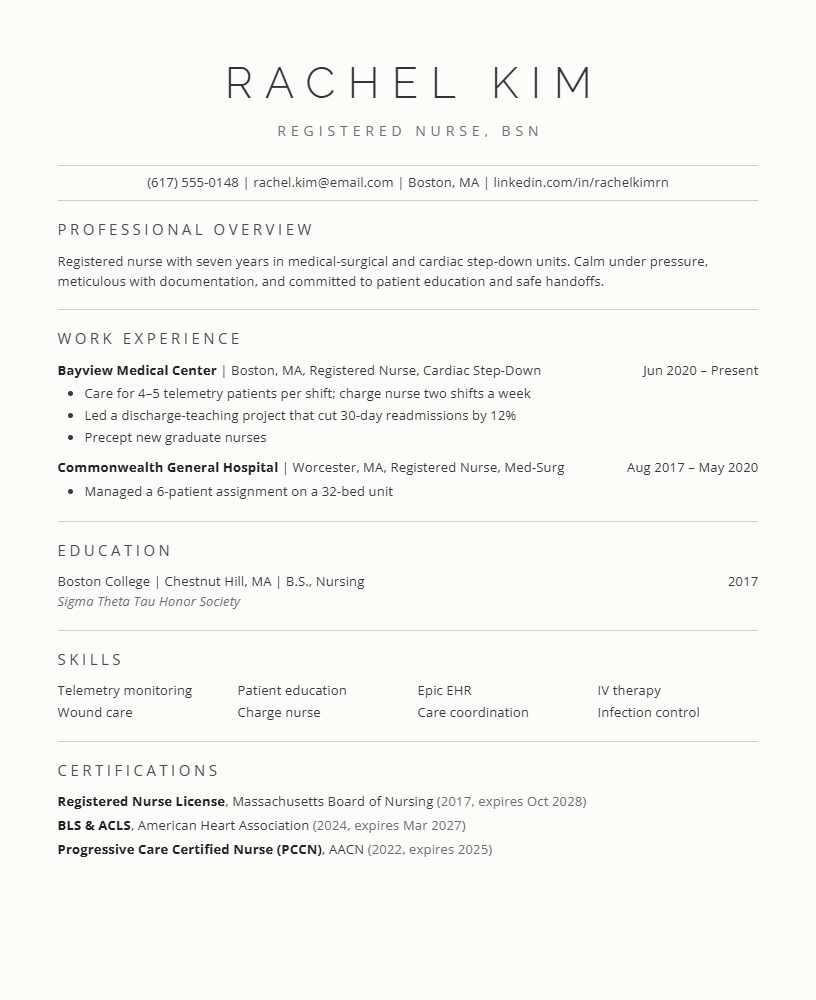
A clean single-column resume that follows this guide and reads well in online systems.
Use this template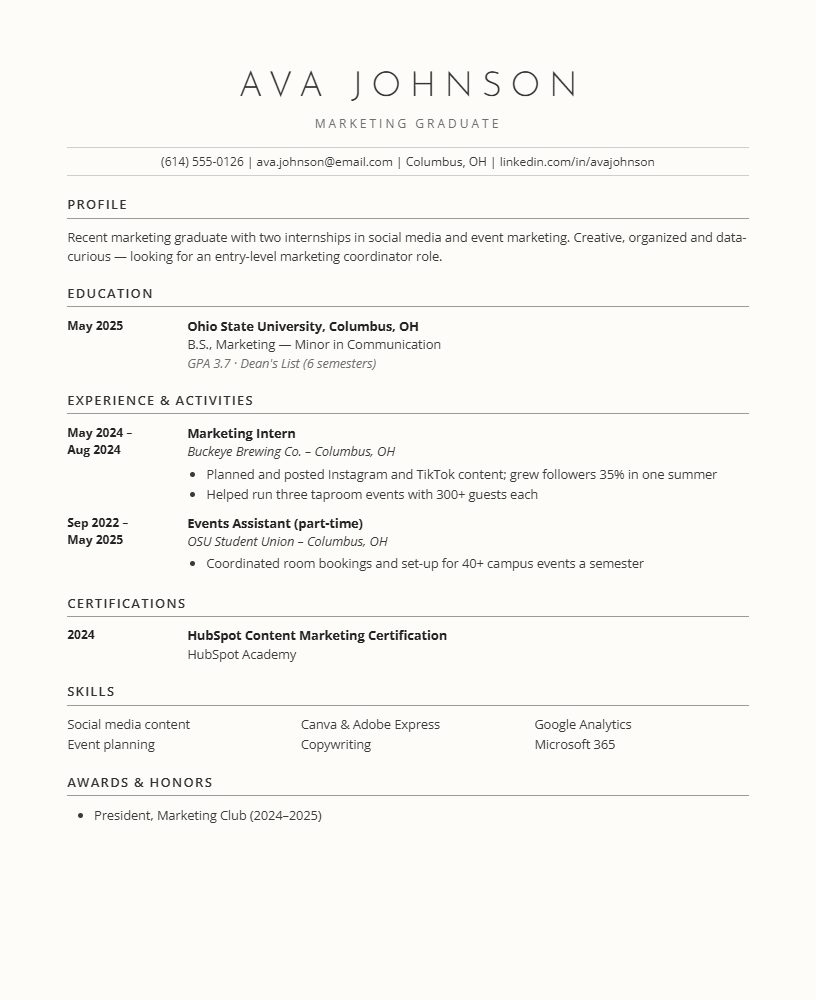
For students: education and co-op terms first, on one page.
Use this templateFree to edit online. US$12 (about C$17) one-off to download, with no subscription.