How to write a graduate CV in the UK
Graduate recruiters know you don’t have years of experience. They are looking for evidence that you can learn quickly, work with others and get things done. Your degree, part-time work and activities can all show that, if you describe them well.
Put education first
While you are a student or recent graduate, your degree is usually your strongest selling point, so it goes straight after your personal statement. Include:
- Degree title, university and graduation year, for example “BSc Psychology, University of Bristol, 2026”.
- Your classification, or predicted classification if you haven’t finished: “Predicted 2:1”.
- Three to five relevant modules, with marks if they are strong.
- Your dissertation or final-year project: the title and one line on what you found or built.
- A-levels or equivalent with grades. GCSEs can be summarised, for example “9 GCSEs including Maths and English”.
Once you have a couple of years of work experience, move education below it and cut the detail to the degree and classification.
Make the most of part-time work
Bar, retail, call-centre and delivery jobs are valuable on a graduate CV. They show reliability, customer skills and time management. Describe them by what you achieved, not by the tasks:
Worked as a waiter in a restaurant.
Served up to 80 covers a shift at a busy city-centre restaurant while studying full-time; trained four new staff and was promoted to shift lead in my second year.
Internships, placements and work experience
Give each one a heading with the organisation, your role and the dates, then two to four bullet points. A summer internship or placement year is often the most important part of a graduate CV, so describe a real piece of work you did and what came of it. Spring weeks, insight days and virtual work experience programmes can go in a shorter “Insight and work experience” section.
Societies, volunteering and projects
Committee roles, sports teams, volunteering and personal projects are good evidence of leadership and initiative. Pick the ones that relate to the job and say what you did: organised, raised, built, led or improved.
Treasurer, University Hiking Society (150 members): managed a £12,000 annual budget and negotiated a 20% discount with our coach provider.
Skills section
List the practical skills the role asks for: software (Excel, Python, SPSS, Adobe), languages with your level, and anything else you can back up. Leave out soft skills like “teamwork” here; show them in your experience instead.
Applying for graduate schemes
Many large employers recruit graduates through online application forms and psychometric tests rather than CVs alone, but you will still need a CV for most applications, recruitment agencies and smaller firms. Tailor your personal statement and the order of your bullet points for each scheme, and match the language in the job description.
Graduate CV checklist
- One side of A4, or two if you have substantial experience.
- Classification (or predicted classification) clearly shown.
- At least one achievement with a number in every role.
- No photo, date of birth or referees’ details.
- A tailored personal statement for each application.
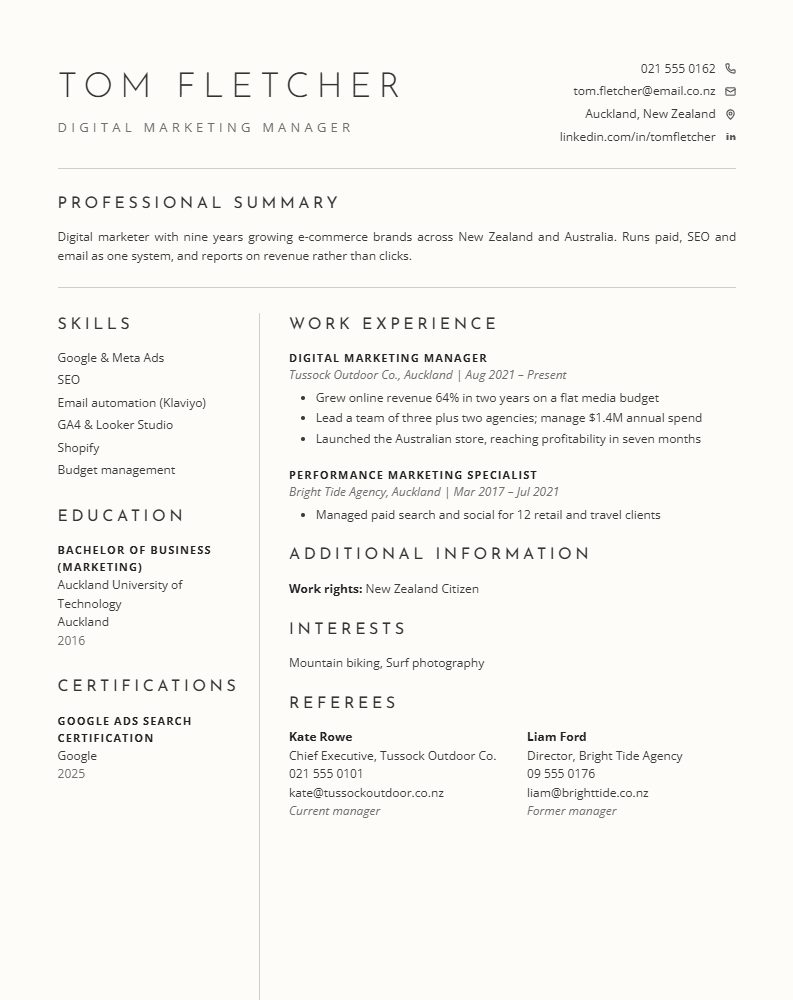
A clean, modern layout that suits graduate applications across most industries.
Use this template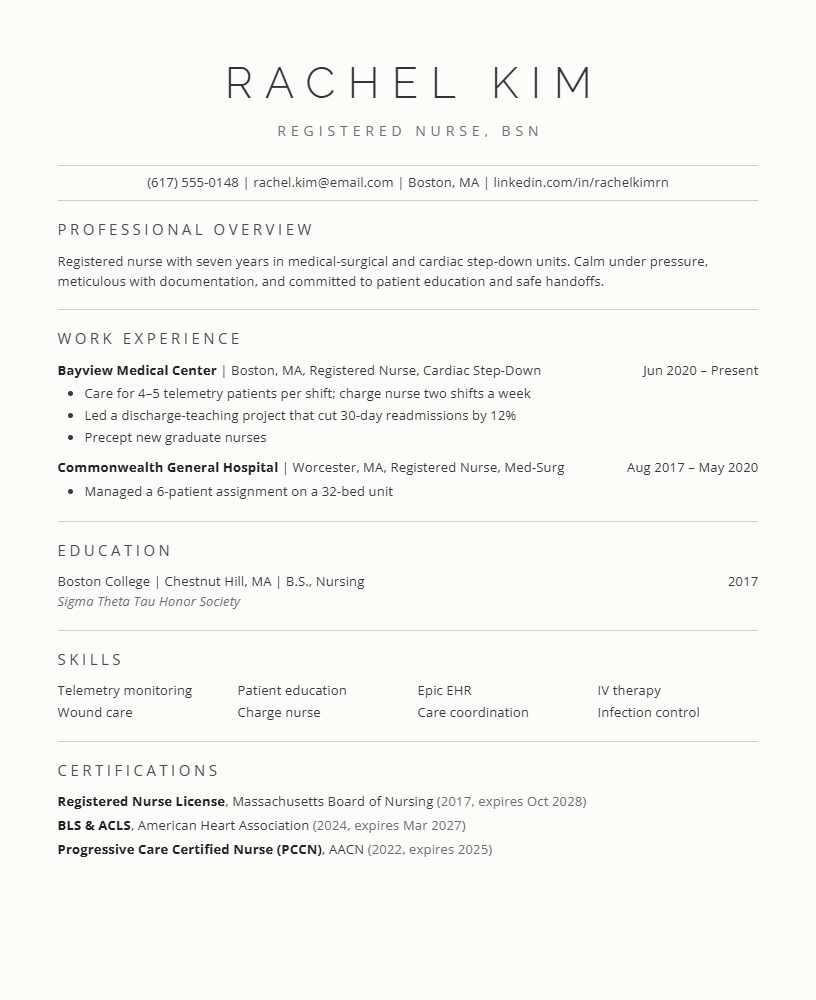
A single-column layout that online application systems read reliably.
Use this templateFree to edit online. US$12 (about £9) one-off to download, with no subscription.