How to write a resume in Australia
An Australian resume is two to three pages of A4 that show an employer what you have achieved, that you have the right to work here, and that you hold any checks or licences the job needs. Here is how to put one together.
The usual order for an Australian resume
- Name and contact details: your name, mobile, email, and suburb and state. A LinkedIn link is optional.
- Work rights: one line, for example “Australian citizen” or “Permanent resident, based in Parramatta, NSW”.
- Career summary: three or four sentences on who you are, what you offer and what you want next.
- Key skills: a short list that matches the job advert.
- Employment history: most recent first, with job title, employer, location and dates (month and year).
- Education and qualifications: degrees, TAFE qualifications such as a Certificate III or IV or a Diploma, and short courses.
- Licences and checks: driver licence, Working with Children Check, police check, White Card, registrations.
- Referees: two people who can speak about your work, or “available on request”.
How long should a resume be in Australia?
Two to three pages is the norm. Recruiters skim the first page, so put your strongest, most recent work there. If your career is long, give full detail for the last ten years and summarise earlier roles in a line each.
Writing your career summary
Logistics coordinator with seven years in warehousing and freight across Melbourne’s west. I schedule a fleet of 30 trucks, manage carrier relationships and keep on-time, in-full delivery above 97%. Forklift licence (LF) and MR truck licence. Looking for a transport or operations supervisor role.
Keep it factual and specific to the job. Australian employers respond well to a direct, no-fuss style.
Describing your employment history
For each role, write three to six bullet points that lead with achievements, not duties. Add numbers wherever you can: customers served, budgets, team size, sales, time or money saved.
In charge of customer complaints.
Handled escalated complaints for a 60-seat contact centre and cut repeat complaints by 35% by fixing the three most common billing errors at the source.
Licences, checks and registrations
Many Australian jobs need specific checks or licences, and recruiters look for them straight away. List each one with its number or state and expiry date where relevant: Working with Children Check (each state issues its own), National Police Check, White Card, High Risk Work Licence, RSA, first aid, or AHPRA and teacher registration.
What to leave off
- Photo, date of birth, age, marital status, religion and health details.
- Your tax file number, bank details or superannuation details. You give these after you are hired.
- Salary history: discuss pay at interview, or answer the advert’s salary question if there is one.
- Every job you have ever had: summarise roles from more than ten to fifteen years ago.
Applying on Seek and other job sites
Most Australian jobs are advertised on Seek, with federal government roles on APSjobs and state roles on each state’s own jobs board. Many employers use software to sort applications, so upload a PDF unless asked for Word, use standard headings, and repeat the key words from the advert. Add a cover letter, and answer any screening questions carefully, because they are often scored.
Applying for a government job? Read our guide to selection criteria
Final checklist
- Two to three A4 pages with Australian spelling.
- Work rights and location near the top.
- An achievement with a number in each recent role.
- Licences and checks with expiry dates.
- Two referees who have agreed to be contacted.
- No photo, date of birth or tax file number.
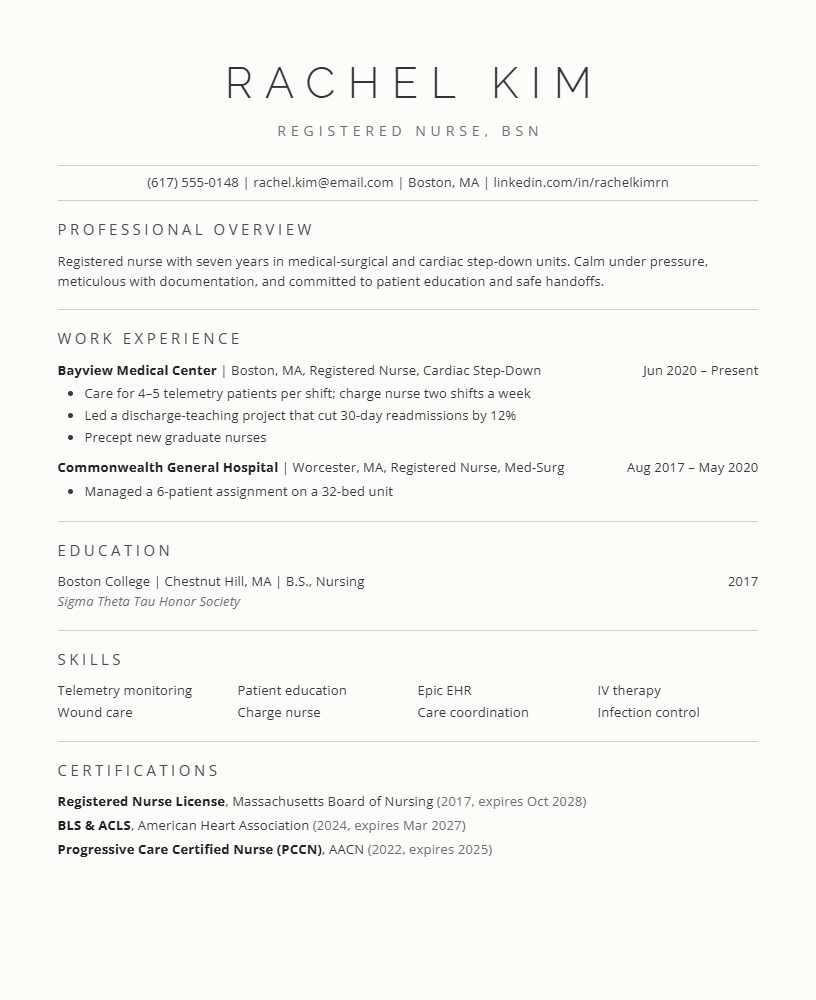
A clean single-column layout that follows this guide and reads well in online systems.
Use this template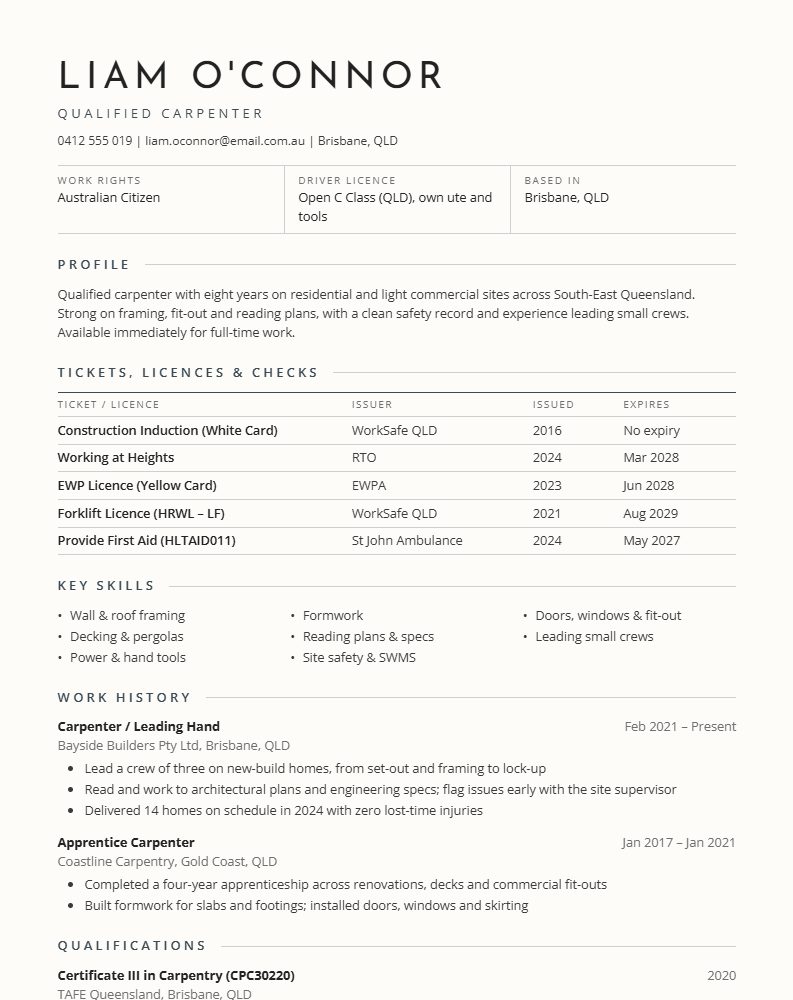
For trades: work rights, licence and a tickets table built in.
Use this templateFree to edit online. US$12 (about A$18) one-off to download, with no subscription.